Media Island
Description
For this project, you will make use of the additional knowledge we gained in this unit to develop a complex multimedia world. Your project does not need to include characters or hallmarks of traditional world building, and instead could be a multimedia experiment that thinks through the relationship between space, text, image, video and interactivity. Although your project does not need to contain a “world” as might be found in adventure video games, your project should play with some idea of cohesive space. Consider the multimedia project Puppet Motel by Laurie Anderson. Although not a cohesive world by contemporary video game world building standards, the project makes use of disparate scenes of text, image, video and animation to create a loosely linked world. In this project, Anderson collects new work and past work to create a limited world in which we explore, an island of media.
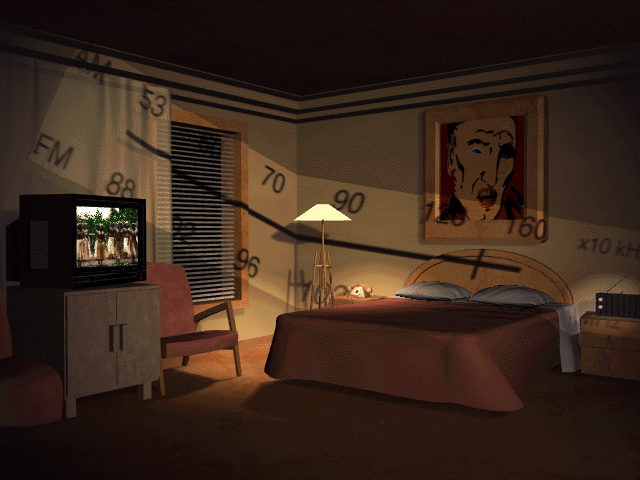
Screenshot of Puppet Motel
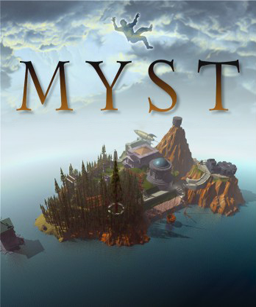
When developing Myst, Cyan Worlds developers Rand and Robyn Miller faced the problem of slow loading times on the, at the time, new technology of CD ROMS. In order to package all the information about their game in ways that would be quickly readable on the disk, they decided to store different parts of their world as islands. In this way, the islands not only becomes a conceptual part of the narrative of the game, but also something brought about by direct limitations of the hardware. In this way, the island as both a metaphor and a way to limit to the space of the player due to the impossibility of building an infinite world as been adopted by a variety of adventure games. From The Witness to Dear Esther to Oxenfree to Mutazione, islands are a location in which many exploration games turn too. Islands in these games often function as both closed systems, but also as ways to have a narrative bounds to the space of play. Even in games that don’t take place on islands go through great effort to restrict our movement to keep us both contained technically, narratively, and conceptual in the small part of the world the game creates. One recent example is Future? No Thanks! by Molleindustria which takes places in a fictionalized version of Pittsburgh. Try to take one of the many roads that leave the city and you’ll quickly realize your contained within an intentionally designed island of meaning, a limited space in which the developers want us to explore.
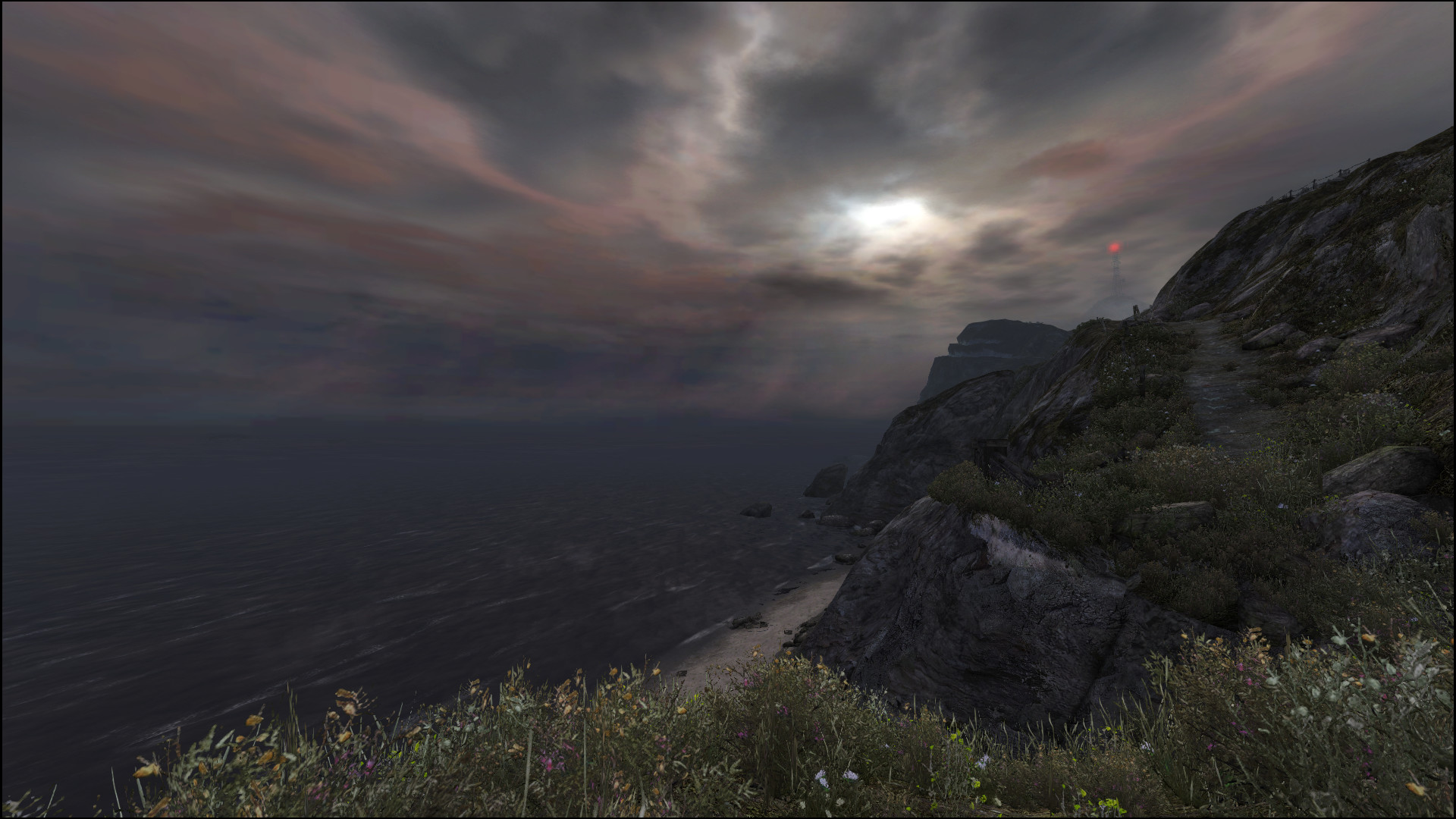
Island from Dear Esther
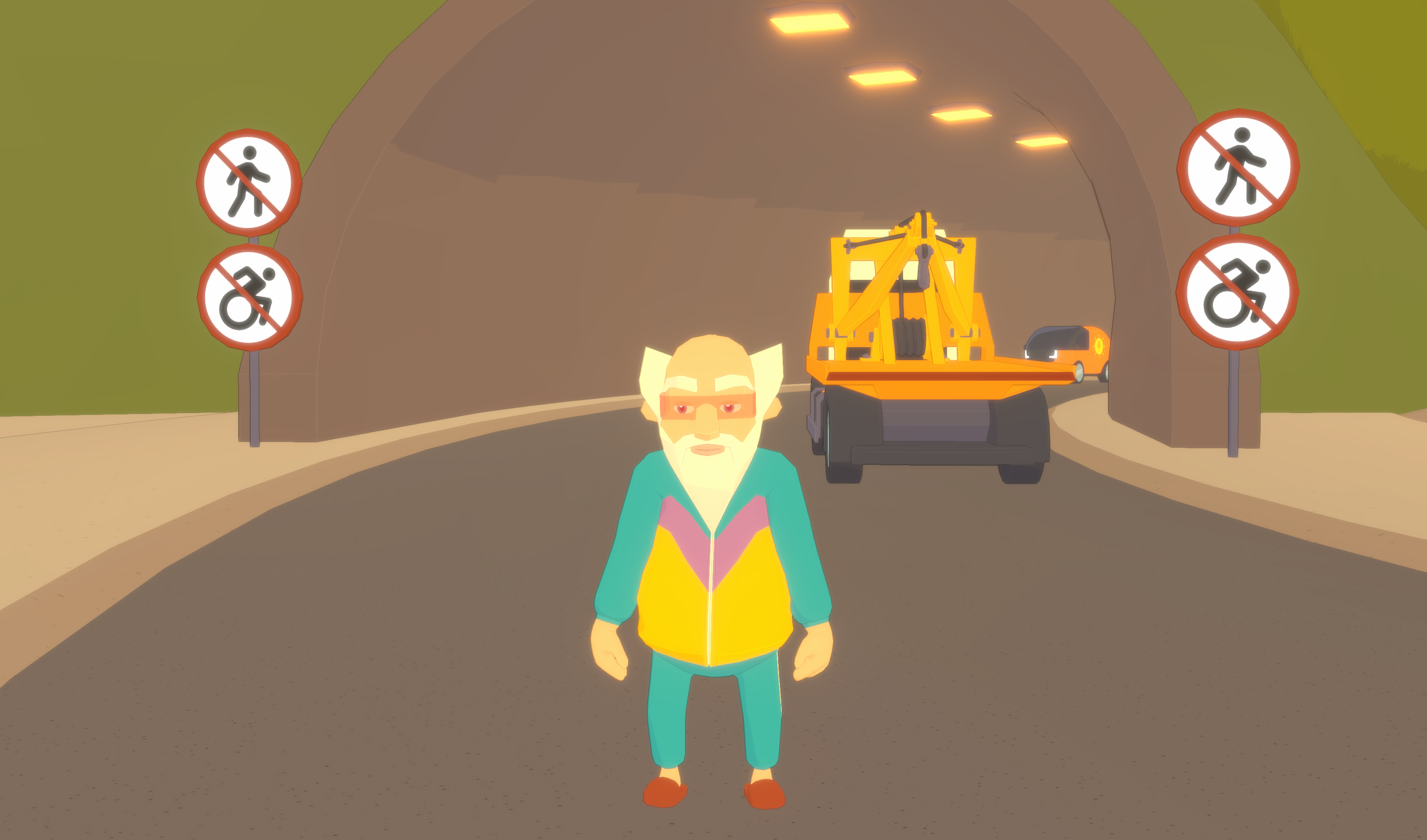
The bounds of the world in Future? No Thanks!
For this project then, your aim is to create a media island of your own. This is not a literal island, but instead an island as thought of in the world of experimental multimedia art and indie adventure games: a space not defined by it’s unlimited open world, but oppositely, the careful and intentional decisions to curate what is accessible within this world and what is not.
Project Components
| Component | Points |
|---|---|
| Close Play and Journal | 3 |
| Proposal | 1 |
| Prototype | 2 |
| Writing | 4 |
| Game | 15 |
| Total | 25 |
Readings
To assist in the development of this project, you will be engaging with a variety of reading and media that deal with the history and development of adventure games and experimental CD rom multi media art. During this unit, we will be engaging with the following text and videos:
- Nooney, L. (2023). The Apple II Age: How the Computer Became Personal.
- Hutchison, A. (2008) Making the Water Move: Techno-Historic Limits in the Game Aesthetics of Myst and Doom. Game Studies. 8(1)
- Yet Another Excavation Zone: the Multimedia by Erkki Huhtamo
- Exhibition Text for Contact Zones: The Art of CD-Rom
We will additionally be playing the following games:
- Mystery House by Roberta and Ken Williams
- Myst by Cyan Studios
Close Play and Journal
In addition to assigned readings and media, students must complete a close play of two games during this unit. Students should play each of their chosen game for 1 hour each. Critically playing for a longer period of time is strongly encouraged. It is recommended that students browse through the list of games and look up a trailer or long play of each game before making a decision on what games to play. Students are also encourage to play more than two games on the list.
Student should approach their play using a close play methodology outlined in this article by Edmond Y. Chang.
The below selection of games is a curated list of contemporary independent video games that explore the idea of a media island. Most of these games exist as 2D of 3D exploration games in which players can navigate through a world, collect items and meet various characters.
As part of the close play assignment for this project, you will also be submitting a game journal. Your game journal should be around 200 words per game and should informally respond to the games based on the topics and ideas we are covering in class.
You may find the following prompts helpful as you write each journal entry (From The Well-Read Game: On Playing Thoughtfully, Fullerton & Farber, 2025)
- Describe your experiences in the game as if you are describing a dream or travelling to a new place. (Use the first person, present tense.)
- How does the game begin — Where are you? Who are you playing? What do you want or need to do? As the game unfolds, what happens that moves you? Do you relate to any characters or situations? What do you bring to the game from your own lived experiences?
- Are there peak moments of play that make you want to capture them as screenshots or to remember
List of Games
- 10 Beautiful Postcards (Access provided through class Box)
- A Short Hike
- Anthology of a Killer
- EVERYTHING IS GOING TO BE OK
- Future? No Thanks!
- Hylics
- Kentucky Route Zero
- Lieve Oma (Access provided through class Box)
- Mutazione
- Night in the Woods
- Time Flies
Submit
Submit your journal to Canvas.
Proposal
Within your proposal answer the following questions. Bring a printed copy of your proposal to class to discuss with the instructor.
- What is the working title of your project?
- In one paragraph, describe the experience of your project and describe your island
- What are the media components that will make up your island?
- How will you produce these components?
- What is your plan for programming the project? Will you need to learn additional skills? What is your timeline between now and the due date of the project?
- What additional games or other forms of media will you research and explore to produce this project?
Rubric
1: The student answered all questions and clearly articulated the design intentions of their project.
0-1: The student answered some to all questions and mostly articulated the design intentions of their project.
Prototype
Submit a prototype that includes all the major interactions your project will include. Your project does not need to include your final art assets. This should be a gray box prototype; meaning your project should include your most difficult to program systems and not your final art assets. As the point of your prototype is to get feedback on your in-progress project, you should have enough of your project complete to be able to get peer and instructor feedback. Your project must be playable on the due date of the prototype. Students should prepare questions for peer and instructor feedback on their prototype.
2: The student’s prototype is playable and conveys the main ideas of the project. Peers and the instructor are able to provide feedback based on the level of completeness of the prototype. The student is prepared with questions to ask about their project.
1: The student’s prototype is playable, however, the project is completed to such a degree that it is difficult to understand the student’s intentions. As a result, peers and the instructor may have difficulty providing feedback on the project.
0: The student’s prototype is non-functional or is incomplete
Submit
Bring your playable prototype to class and have it set up for students and the instructor to engage with.
Final Game
The submission for your final game should include:
An itch.io page that includes:
- A zipped Windows build of your project
- 3 screen shots of your project
- The title of your project
- A short paragraph description with controls information
The itch.io page should be submitted to both Canvas and the class Discord
The final game will be graded using the following rubric.
Project with incomplete materials listed above will lose points for based on the amount of items missing.
Final Rubric
Check List (points lost for missing items)
- Customized itch.io page
- A zipped Windows build of your project
- 3 screen shots of your project
- Title of your project
- A short paragraph description with controls information
- Itch.io page submitted to Canvas
Concept (5 points)
4-5: The student went above expectations in their conceptual approach to the project. The student approached the concept for the project with creative/intellectual generosity and was able to demonstrate conceptual risk-taking in their project.
3-4: The student met expectation in their conceptual approach to the project. The student presented a thoughtful interpretation of the project prompt.
0-2: The student did not meet expectation in their conceptual approach to the project. The student did not demonstrate an understanding of the assignment. The assignment might be missing required elements or shows little effort to consider the project prompt.
Code (5 points)
4-5: Within the project, the student used their programming knowledge to create a conceptually and technically complex system. The student made use of materials learned in class as well as explored new approaches to using Unity. The student is able to clearly communicate their system and the programming concepts they used to design their project. The program is fully functional.
3-4: Within the project the student used their programming knowledge to create a functional system. The student only made use of functions learned in class. The student can communicate their system and the programming concepts they used to design their project. The program contains some bugs but is functional.
0-2: The student project is either non-functional or barely functional. While effort was made to create the project, the final code contains bugs or errors that causes the program to be unable to run. The student did not seek help from the instructor or peers in advance of submission. The program may not be functional.
Craft (5 points)
4-5: The student demonstrated exceptional thoughtfulness and intentionality in their visual, text, audio, and interactive design. Visual, text, audio, and interactive elements of the project are clearly connected with the student conceptual approach.
3-4: The visual, text, audio, and interactive elements of the project is somewhat intentional and can be connected to the conceptual approach to the project.
0-2: The visual, text, and interactive elements of the project are unrelated to the conceptual approach to the project.